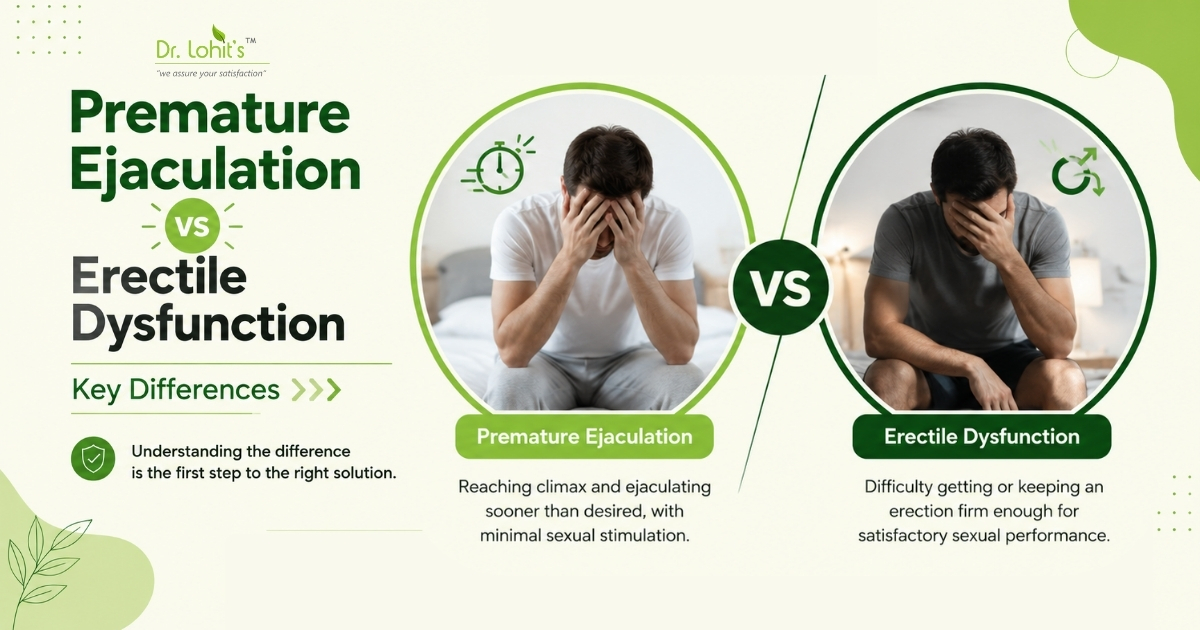
Premature Ejaculation vs Erectile Dysfunction: Key Differences
Premature ejaculation and erectile dysfunction are often confused. Learn how they differ in symptoms, causes and treatment, and when to seek professional help.
Introduction
Sexual health concerns can be difficult to talk about, even when they are affecting confidence or relationships. Two commonly confused conditions are premature ejaculation and erectile dysfunction. They can occur separately, but some men may experience both.
Understanding premature ejaculation vs erectile dysfunction starts with knowing what each condition actually involves. The symptoms, causes and treatment approaches can be different, so identifying the problem correctly matters.
What Is Premature Ejaculation?
Premature ejaculation generally refers to ejaculating sooner than desired, often with limited control and associated distress. It can happen occasionally, but persistent difficulty controlling ejaculation may warrant professional assessment.
The main issue is usually ejaculation control rather than the ability to develop an erection. When looking at premature ejaculation vs erectile dysfunction, this distinction is important. A man may have a firm erection but still struggle with ejaculation timing.
What Is Erectile Dysfunction?
Erectile dysfunction, or ED, involves difficulty getting or maintaining an erection that is firm enough for satisfactory sexual activity.
The problem can be occasional or ongoing. Stress, anxiety, certain health conditions, medicines, lifestyle factors and other causes can contribute. If symptoms keep returning, speaking with an ED specialist can help identify the underlying cause and guide treatment.
In PE vs ED, the key difference is what happens during sexual activity. PE primarily concerns ejaculation control, while ED concerns achieving or maintaining an erection.
Premature Ejaculation vs Erectile Dysfunction: The Main Difference
The simplest way to understand premature ejaculation vs erectile dysfunction is to look at the specific sexual function affected.
| Premature Ejaculation | Erectile Dysfunction |
|---|---|
| Mainly involves ejaculation timing | Mainly involves erection quality |
| Erection may be normal | Erection may be difficult to achieve or maintain |
| Control over ejaculation may be limited | Firmness or duration of erection may be affected |
| Can create frustration or anxiety | Can affect confidence and intimacy |
Both conditions can affect relationships and emotional wellbeing, but they aren't the same problem.
Can Both Conditions Happen Together?
Yes. Some men may experience both. For example, anxiety about losing an erection can lead someone to rush sexual activity, while repeated difficulties with ejaculation can increase performance anxiety. This can create a frustrating cycle.
That's why identifying whether the concern is PE, ED, or both is important when considering treatment for sexual disorders. A proper assessment can help determine what is happening rather than relying on assumptions.
Common Factors Behind These Problems
Sexual difficulties can have physical, psychological or lifestyle-related contributors. Stress and anxiety can affect sexual performance. Relationship difficulties, poor sleep and certain medicines may also play a role. Medical conditions affecting blood vessels, hormones or nerves can contribute to erectile difficulties.
Premature ejaculation may also be associated with psychological factors, relationship concerns or other individual circumstances. The cause isn't always obvious, which is why professional evaluation can be useful.
How Diagnosis Can Help
A confidential consultation usually begins with questions about your symptoms, medical history, lifestyle and sexual concerns.
At Dr Lohit's Ayur Sex Clinic, the stated approach includes a confidential initial consultation followed by assessment and an individually designed treatment plan. The clinic also describes combining Ayurvedic assessment with modern clinical insight. Booking an ED consultation can help distinguish between premature ejaculation and erectile dysfunction instead of treating every concern in the same way.
Why Emotional Wellbeing Matters
Sexual problems aren't always purely physical. Worrying about performance can increase tension, while repeated difficulties can affect confidence and relationships. This doesn't mean the problem is "just in your head". Psychological and physical factors can influence one another.
Talking openly with an appropriate professional can help identify these factors and make treatment more focused.
Treatment Depends on the Problem
There isn't one treatment that works for every sexual concern. For premature ejaculation, management may focus on improving ejaculation control and addressing contributing psychological or physical factors. Erectile dysfunction may require evaluation of underlying health conditions, medicines, lifestyle factors and other causes.
When dealing with sexual disorders, treatment should be based on the individual's symptoms rather than a general assumption. An ED specialist can recommend the most appropriate approach after a proper assessment.
When Should You Seek Help?
An occasional sexual difficulty doesn't necessarily indicate a disorder. However, if the problem happens repeatedly, causes distress or affects your relationship, speaking with a qualified professional can be worthwhile. Don't let embarrassment delay a conversation.
If you're unsure whether your symptoms indicate PE, ED or another concern, an ED consultation can provide clarity and point you towards the right next step.
Confidential Care Can Make Talking Easier
Many people delay seeking help because discussing sexual health feels uncomfortable. A private, non-judgemental consultation can make the conversation easier. Dr Lohit's Ayur Sex Clinic states that consultations are confidential and personalised, with both in-person and online consultation options available.
Having a clear conversation about symptoms is often the first step towards understanding what is happening.
Lifestyle Can Also Play a Role
Healthy daily habits can support overall sexual wellbeing. Regular physical activity, adequate sleep, balanced nutrition and stress management are useful foundations.
However, lifestyle changes shouldn't be treated as a guaranteed solution for every case. If symptoms persist, professional evaluation remains important, particularly when erectile problems may be connected with an underlying health condition.
Don't Self-Diagnose
Searching online can provide useful information, but it cannot replace an individual assessment. A person experiencing erection difficulties may assume they have premature ejaculation, or vice versa. Other sexual or medical conditions can also produce similar concerns.
Understanding PE vs ED is useful, but diagnosis should be based on the person's actual symptoms and medical history.
Conclusion
Understanding premature ejaculation vs erectile dysfunction can help men recognise what they are experiencing and seek appropriate support. PE mainly concerns ejaculation control, while ED involves difficulty achieving or maintaining an erection. They can occur separately or together, and the underlying causes can vary.
Dr Lohit's Ayur Sex Clinic provides confidential consultations and personalised sexual wellness care for concerns including premature ejaculation and erectile dysfunction.
Frequently Asked Questions
1. What is the main difference between premature ejaculation and erectile dysfunction? The key difference between premature ejaculation and erectile dysfunction is the sexual function affected. Premature ejaculation mainly involves ejaculation happening sooner than desired with limited control, while erectile dysfunction involves difficulty achieving or maintaining an erection firm enough for satisfactory sexual activity.
2. Can PE and ED happen at the same time? Yes. PE vs ED describes different conditions, but they can occur together. Anxiety about maintaining an erection may influence ejaculation timing, while repeated ejaculation difficulties can increase performance concerns. A professional assessment can help determine whether one or both issues are present.
3. Are premature ejaculation and erectile dysfunction sexual disorders? Both can be considered sexual disorders when persistent symptoms cause significant distress or difficulties in sexual relationships. However, occasional changes in sexual performance are common and don't necessarily indicate a disorder. A qualified professional can assess symptoms and determine whether treatment may be appropriate.
4. When should I seek professional help for these problems? Consider seeking help when sexual difficulties happen repeatedly, cause distress, affect your confidence or create relationship problems. Understanding premature ejaculation vs erectile dysfunction can be a useful starting point, but professional assessment is important when symptoms persist, or you are uncertain about their cause.
5. Can lifestyle changes improve sexual health? Healthy habits such as regular exercise, adequate sleep, balanced nutrition and stress management can support overall wellbeing and sexual health. However, persistent sexual disorders may have additional physical or psychological causes, so lifestyle improvements should complement professional assessment rather than replace appropriate medical care.
Have a private question?
Book a confidential consultation with Dr. Lohit — in person or online.